


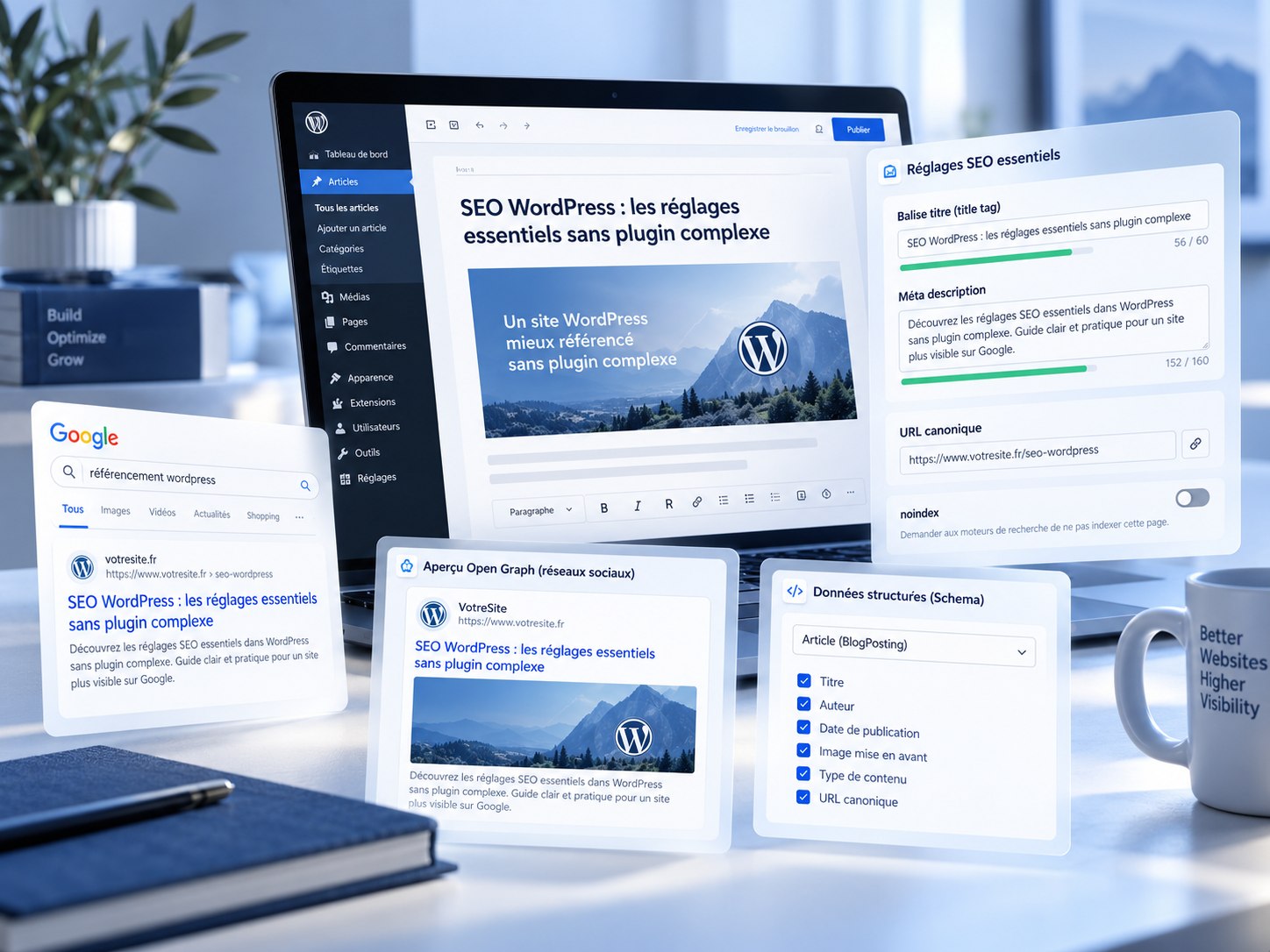
WordPress SEO does not have to begin with an elaborate plugin. Search engines need to understand what a page is about, while visitors need content that answers their questions. A lightweight tool can help manage page metadata, but it cannot replace good site architecture or meaningful writing.
1. Give every important page a distinct SEO title
A title should accurately describe the page. Google may choose a different title in search results, so avoid stuffing keywords into a rigid template. Service pages and advice articles should not all use the same wording.
2. Write useful meta descriptions
A meta description is a suggested summary, not a guaranteed search snippet. Explain what readers will gain. It is not a direct Google ranking factor, but clear wording can help visitors decide which result fits their needs.
3. Check canonical URLs
A canonical tag signals your preferred URL when similar content can be reached through different addresses. It should align with accessible pages and internal links. Search engines treat it as a hint, not an unconditional instruction.
4. Apply noindex selectively
Internal search pages, temporary content and test pages may not belong in search results. Do not accidentally mark key services or blog posts as noindex. Also remember that blocking a URL in robots.txt may prevent crawlers from seeing its noindex directive.
5. Keep structured data accurate
Schema.org describes entities such as an organization or an article. Every claim should match visible page content. Do not invent authors, ratings or reviews just to qualify for enhanced search presentation.
6. Prepare social previews
Open Graph tags suggest the title, description and image used when a link is shared. Each platform may cache or override the preview. These tags help presentation, but do not directly boost search ranking.
7. Review the whole page
Metadata is only one part of SEO. Check headings, internal links, image alternatives, mobile navigation and important HTTP statuses. Use Search Console to review indexing and avoid running multiple plugins that output competing SEO tags.
Prefer clarity over complexity
For many business websites, a short list of well-managed settings is enough: titles, descriptions, canonical URLs, index/noindex controls, relevant structured data and social metadata. The main investment should remain useful content and steady measurement.